

A Question of Goals – All Electric?
 From its beginnings the wind industry has recognised the profound need for equitable and environmentally acceptable methods for harvesting energy from naturally occurring renewable resources. It is also recognised today that many different methodologies need to be employed to supply power to the myriad applications that house, feed, protect and transport us around the planet. Equally, it is recognised that the pressures for more and better alternatives grow as the environment struggles to maintain its natural, life-sustaining, balance. This article discusses how W2, in its development of the WindWing/WaterWing system, has attempted to address the long-term requirement for wind harvesting that does not have severe economic and environmental consequences.
By Gene R. Kelley, Founder and Chief Executive Officer, W2 Energy Development Corporation, USA
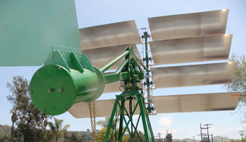
In realising these conditions, there is one critical point that needs to be emphasised up front – one that is essential to understand, and one that sets the developing W2 WindWing/WaterWing technology system apart from the generally accepted electricity producing systems that are in the market already. The technology (which is outlined in the figures and captions accompanying this article, and was covered in more detail in the March 2008 issue of Windtech International) is not solely dedicated to producing electricity. It is designed to be a part of a larger system that extracts and utilises the energy inherent in blowing wind and flowing water more efficiently. The technology is being developed around the concept that a more efficient, diverse and cost-effective approach is required to satisfy power demands, both at the present as well as into the future. In this respect the focus has to be on developing new harvesting (extraction) techniques in a more distributed system.
Primary Focus
Logically, the primary focus of any development programme should be the satisfaction of all the diverse applications that need to be addressed. The W2 staff began to realise that the quality and variety of engineering needed to utilise the power extracted would be wide ranging. It would require more skill-sets than we needed if we were only going to concentrate on the most efficient harvesting techniques, or if we were going to be able to define power output in terms of the quantity and quality required for many disparate applications. The many different ways the extracted force can be used is far better developed by specialists in the specific application areas for which the power is needed.
Concentrating on the conversion of the force immediately to electricity would have been a mistake. One size does not fit all and the design objective changed to that of providing the applications engineering community with a design capability not defined by the need for electricity alone.
The Entrenched Attitude
However, electricity is the accepted norm, and the W2 type system can, in fact, be used very effectively in harvesting power for that use as well. Being part of a system, the technology will also address many of the problems associated with the production and distribution of electricity. Any emerging technology has to be acutely aware of the need for making ‘the light bulb come on’ and for making it cheaper to do so. Conversion to electricity will continue to be the primary action in the energy world for a long time.
But, the project development goal became more directed to providing for the capture of natural resource energy in a form that could be used directly in an application, rather than just depending on the complexities associated with the conversion and distribution of this energy into electricity.
An Alternative
Electricity is not the only option for many applications and by exploring these options the demand for electricity will be commensurately mitigated. The interest is to provide an effective force at a point of use for any application, be it pumping water, compressing air, creating a vacuum, driving refrigeration units, just to mention a few of the possibilities.
Essentially, this approach recognises that the currently accepted model for using renewable energy forces its conversion to electricity. This is the faulty part of the commercial thinking of today and this mindset has to change if the demands for alternative energy utilisation are to be met.
A Universal Need that is Growing
With regard to economic reality, there is a universal requirement of paramount importance to control the cost and distribution of the electricity that is needed. Unfortunately, there is little or no activity associated with adopting new non-electric energy utilisation techniques. Nor are there any inexpensive and acceptable methods for producing large amounts of electricity without using significant quantities of carbon based fuels that also require environmentally disruptive technologies, technologies that themselves need excessive amounts of energy to harvest and process the fuels required to support them. The objectives are to remedy this situation with a more productive, inexpensive and practical solution without disrupting the flow of electricity to where it is most needed and, at the same time, to reduce the need for electricity.
Another of the objectives of the developing system is to show that a new technology owned, manufactured, operated and maintained by local and regional entities is better suited for sustaining and improving the economic health of a region. In this respect it is a jobs programme, and seeks to utilise, to the highest degree possible, the industrial, natural and human resources already available in an area.
Realistic Goals
These are not unrealistic goals. They can be achieved through cooperative efforts among all the technologies that are proving themselves competitively in their respective fields. The W2 technology is described by many in the engineering community as that constantly sought-after ‘elegant simplicity in design’, and it invites cooperation rather than competition. It requires major integration of human resources at multiple skill levels and it does not require exotic equipment for manufacturing, operation or maintenance. It can operate effectively and efficiently in lower wind velocities in a more widely distributed harvesting system – a system that is environmentally benign and more suitable for deployment in a wider range of locations.
Biography of the Author
Gene R. Kelley is the President/CEO of W2 Energy Development Corporation, which is organised to apply advanced methodologies for harvesting energy from available and renewable sources, primarily wind and water. A graduate of the University of Virginia, with a B.S. in Economics and Business Administration, Gene R. Kelley is an Instrument Rated pilot with over 5,000 hours of flight experience.{/access}
From its beginnings the wind industry has recognised the profound need for equitable and environmentally acceptable methods for harvesting energy from naturally occurring renewable resources. It is also recognised today that many different methodologies need to be employed to supply power to the myriad applications that house, feed, protect and transport us around the planet. Equally, it is recognised that the pressures for more and better alternatives grow as the environment struggles to maintain its natural, life-sustaining, balance. This article discusses how W2, in its development of the WindWing/WaterWing system, has attempted to address the long-term requirement for wind harvesting that does not have severe economic and environmental consequences.By Gene R. Kelley, Founder and Chief Executive Officer, W2 Energy Development Corporation, USA
{access view=!registered}Only logged in users can view the full text of the article.{/access}{access view=registered}The number of new approaches to solving the problems are also profound, and the variety of new products in the marketplace is beginning to overwhelm the using population as costs and utility are subordinated to availability. We are losing objectivity in judging between the good and the bad. The concern is whether centralisation of power production must be continued or whether decentralisation of production and utilisation is a more likely solution to the growing problems.
Critical PointIn realising these conditions, there is one critical point that needs to be emphasised up front – one that is essential to understand, and one that sets the developing W2 WindWing/WaterWing technology system apart from the generally accepted electricity producing systems that are in the market already. The technology (which is outlined in the figures and captions accompanying this article, and was covered in more detail in the March 2008 issue of Windtech International) is not solely dedicated to producing electricity. It is designed to be a part of a larger system that extracts and utilises the energy inherent in blowing wind and flowing water more efficiently. The technology is being developed around the concept that a more efficient, diverse and cost-effective approach is required to satisfy power demands, both at the present as well as into the future. In this respect the focus has to be on developing new harvesting (extraction) techniques in a more distributed system.
Primary Focus
Logically, the primary focus of any development programme should be the satisfaction of all the diverse applications that need to be addressed. The W2 staff began to realise that the quality and variety of engineering needed to utilise the power extracted would be wide ranging. It would require more skill-sets than we needed if we were only going to concentrate on the most efficient harvesting techniques, or if we were going to be able to define power output in terms of the quantity and quality required for many disparate applications. The many different ways the extracted force can be used is far better developed by specialists in the specific application areas for which the power is needed.
Concentrating on the conversion of the force immediately to electricity would have been a mistake. One size does not fit all and the design objective changed to that of providing the applications engineering community with a design capability not defined by the need for electricity alone.
The Entrenched Attitude
However, electricity is the accepted norm, and the W2 type system can, in fact, be used very effectively in harvesting power for that use as well. Being part of a system, the technology will also address many of the problems associated with the production and distribution of electricity. Any emerging technology has to be acutely aware of the need for making ‘the light bulb come on’ and for making it cheaper to do so. Conversion to electricity will continue to be the primary action in the energy world for a long time.
But, the project development goal became more directed to providing for the capture of natural resource energy in a form that could be used directly in an application, rather than just depending on the complexities associated with the conversion and distribution of this energy into electricity.
An Alternative
Electricity is not the only option for many applications and by exploring these options the demand for electricity will be commensurately mitigated. The interest is to provide an effective force at a point of use for any application, be it pumping water, compressing air, creating a vacuum, driving refrigeration units, just to mention a few of the possibilities.
Essentially, this approach recognises that the currently accepted model for using renewable energy forces its conversion to electricity. This is the faulty part of the commercial thinking of today and this mindset has to change if the demands for alternative energy utilisation are to be met.
A Universal Need that is Growing
With regard to economic reality, there is a universal requirement of paramount importance to control the cost and distribution of the electricity that is needed. Unfortunately, there is little or no activity associated with adopting new non-electric energy utilisation techniques. Nor are there any inexpensive and acceptable methods for producing large amounts of electricity without using significant quantities of carbon based fuels that also require environmentally disruptive technologies, technologies that themselves need excessive amounts of energy to harvest and process the fuels required to support them. The objectives are to remedy this situation with a more productive, inexpensive and practical solution without disrupting the flow of electricity to where it is most needed and, at the same time, to reduce the need for electricity.
Another of the objectives of the developing system is to show that a new technology owned, manufactured, operated and maintained by local and regional entities is better suited for sustaining and improving the economic health of a region. In this respect it is a jobs programme, and seeks to utilise, to the highest degree possible, the industrial, natural and human resources already available in an area.
Realistic Goals
These are not unrealistic goals. They can be achieved through cooperative efforts among all the technologies that are proving themselves competitively in their respective fields. The W2 technology is described by many in the engineering community as that constantly sought-after ‘elegant simplicity in design’, and it invites cooperation rather than competition. It requires major integration of human resources at multiple skill levels and it does not require exotic equipment for manufacturing, operation or maintenance. It can operate effectively and efficiently in lower wind velocities in a more widely distributed harvesting system – a system that is environmentally benign and more suitable for deployment in a wider range of locations.
Biography of the Author
Gene R. Kelley is the President/CEO of W2 Energy Development Corporation, which is organised to apply advanced methodologies for harvesting energy from available and renewable sources, primarily wind and water. A graduate of the University of Virginia, with a B.S. in Economics and Business Administration, Gene R. Kelley is an Instrument Rated pilot with over 5,000 hours of flight experience.{/access}